Technical specifications
- Caliber
- Seiko 4500A, hand-wound
- Jewels
- 25
- Frequency
- 36,000 vph (5 Hz)
- Power reserve
- Around 40 hours, measured
- Case material
- Stainless steel
- Diameter
- 36.5 mm
- Thickness
- 9 mm
- Lug to lug
- 41.5 mm
- Lug width
- 18 mm
- Crystal
- Hardlex
- Manufacture
- Daini Seikosha
- Serial
- 8N2445 — November 1968
Hi-Beat! 36,000 vibrations per hour, ten ticks a second. Most watches of this era were perfectly happy at six, and here was Daini Seikosha pushing a hand-wound movement all the way to ten.
A bit of history first
For those who don't know the story, Seiko in the 1960s was really two companies pretending to be one. Suwa Seikosha made Grand Seiko. Daini Seikosha made King Seiko. They were not working together, they were competing against each other, and honestly I think that rivalry is the whole reason the watches from this period are as good as they are.
The 45 was Daini's answer. In 1968 it replaced the 44KS with a hand-wound movement running at 36,000 vph. And they had good reason for picking that number too, because at the Neuchatel observatory trials their 36,000 vph movements actually outperformed their own 72,000 vph experiments. When your own test results come back like that, the argument is pretty much settled!
Two watches launched the caliber that year, the no-date 45-7000 ( this one ) and the 4502-7000 with a date. The line ran until 1974, and this was the last King Seiko built by hand. The 56KS and 52KS that came after it used highly automated movements, chosen for reliability. It was also the last 36,000 vph movement Daini ever made.
So this is the end of a line, and I think that's a big part of why I like it.
Now to the case, and those lugs
This is Taro Tanaka's Grammar of Design done properly. Flat polished surfaces that hold one clean unbroken reflection, edges left sharp instead of softened, and no curves anywhere to scatter the light. The case band in profile is one continuous mirror from lug to lug.
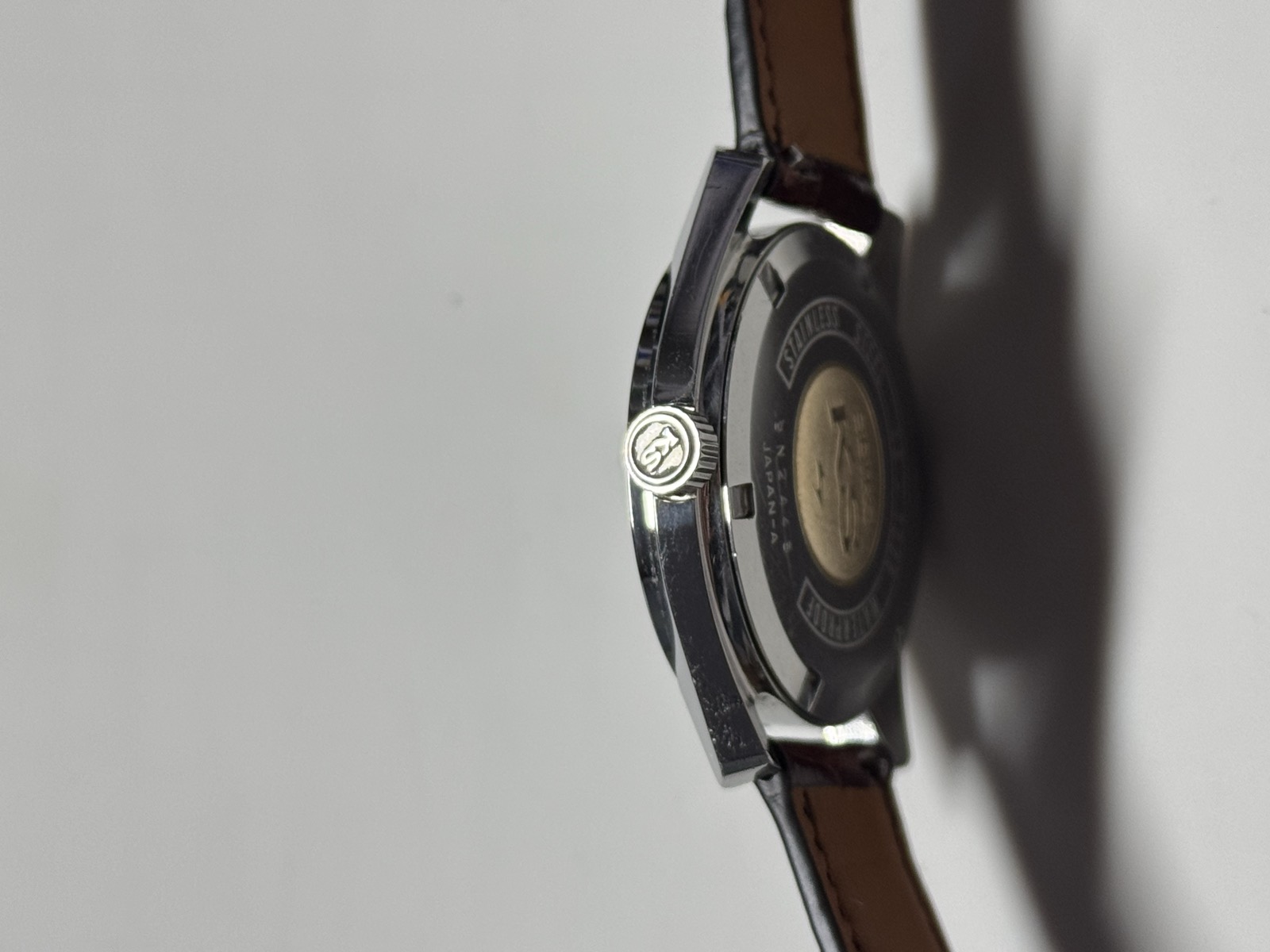
Honestly, the lugs are the reason I own this watch. I've handled a lot of vintage pieces by now and I still haven't found anything at this kind of money that gets it this right. The way the lug facet breaks against the case band, it looks cut rather than cast, and you just don't see that at this price. That's a design philosophy, not a finish, and nobody has managed to reproduce it cheaply since.
The crown is signed KS, it's small, and it sits almost flush. Daini gave this watch no crown guard and no other concession to robustness at all. At 9 mm thick and 36.5 mm across, 41.5 mm lug to lug and 18 mm between the lugs, this is a dress watch and it isn't pretending to be anything else.
Now, full honesty here. This case has been lightly polished. The edges survived it and the geometry still reads correctly, but it is not an untouched example and I'm not going to tell you it is. On a watch where the edges are the whole appeal, that matters! If you're out shopping for one, look hard at the lug bevels before you look at anything else.
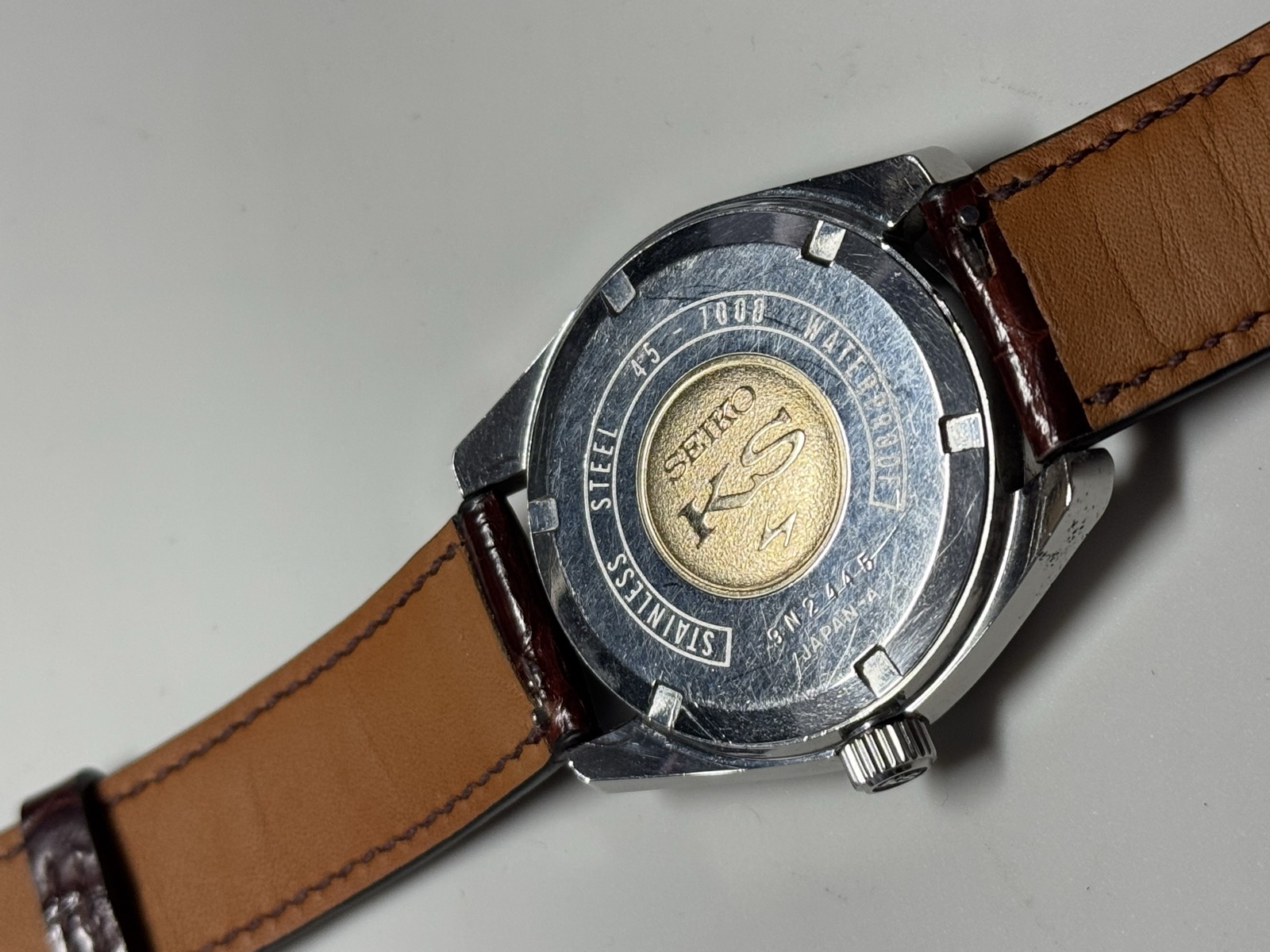
The back carries the gold KS medallion, which the Seiko community goes to real trouble to protect ( this is exactly the obsession that got me started on my Longines see-through case back project ). The engraving is still nice and sharp: STAINLESS STEEL, 45-7000, WATERPROOF, serial 8N2445, JAPAN-A. That serial dates it to November 1968, so it's from the first few months of production.
The dial
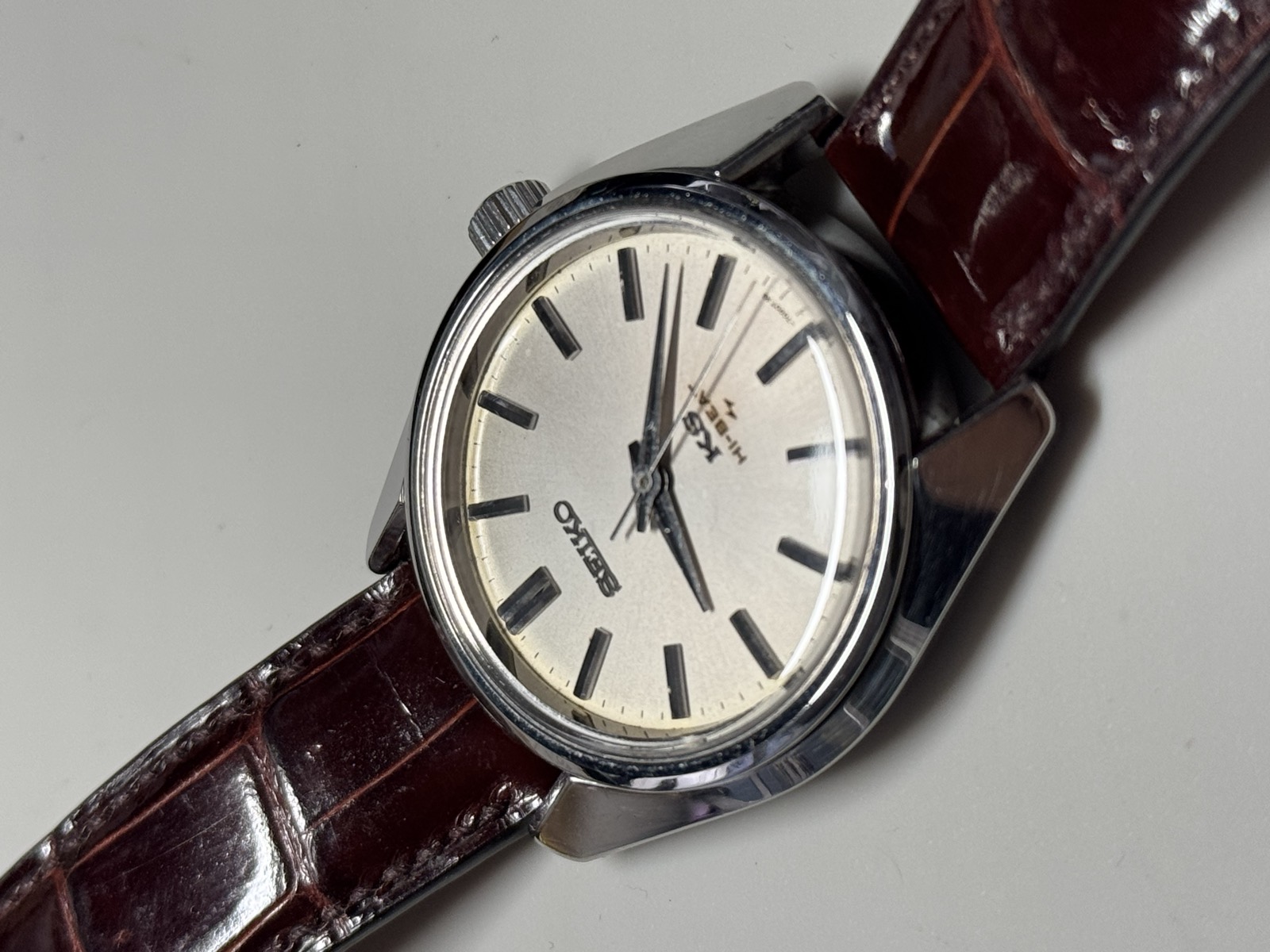
Silver, applied faceted batons, no date, and nothing printed on it except SEIKO at twelve and the KS Hi-Beat logo with its little lightning bolt at six. The markers have enough facets cut into them to catch light from a few angles at once. Sitting still the dial looks plain, but move your wrist and it wakes up.
Mine has warmed up a bit with age and there's some mottling toward the edge. Everything on this watch is original though, dial, hands, nothing swapped out. I would take an honest 58 year old dial over a refinished one any day of the week.
Now to the engine
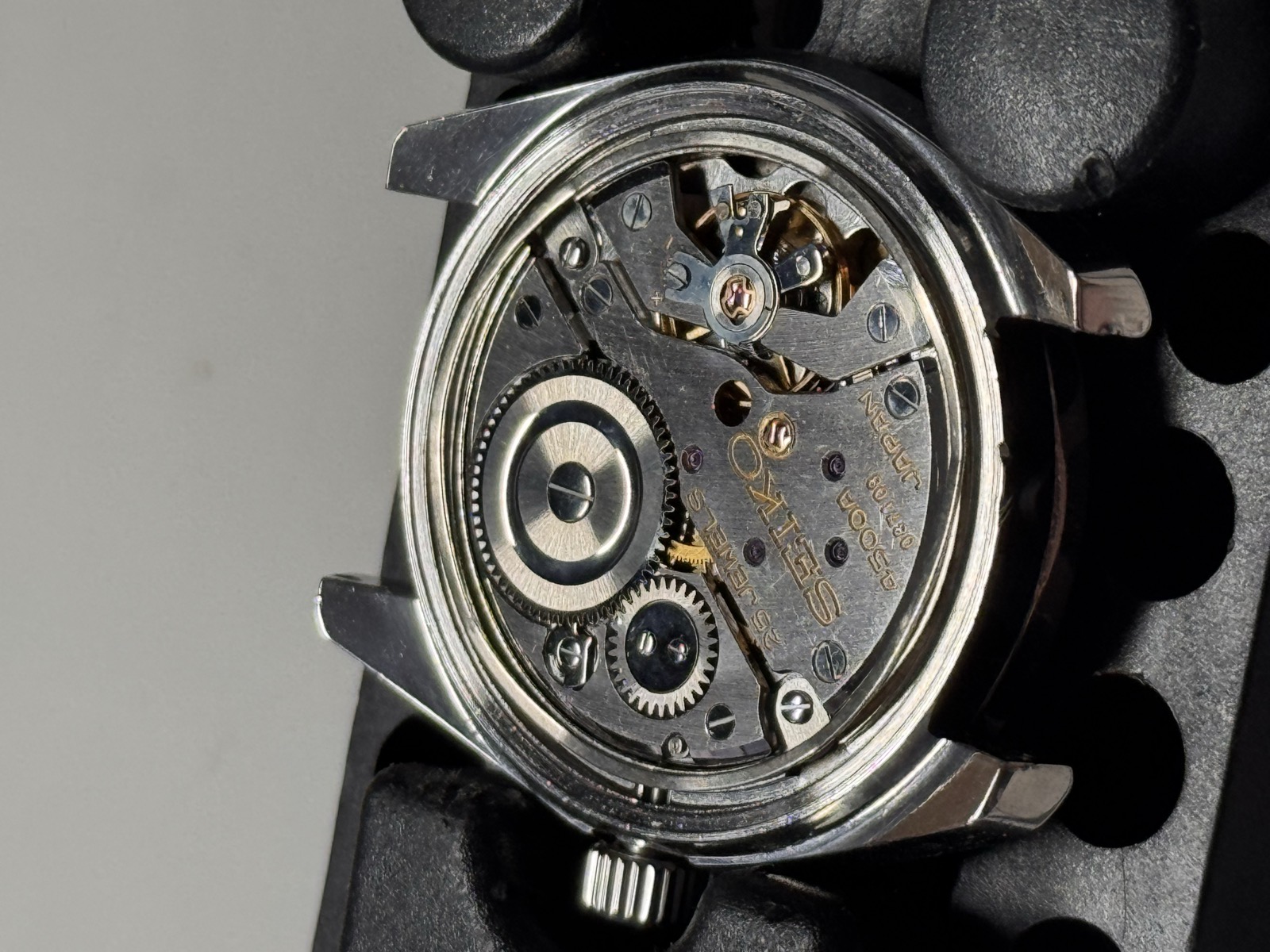
The 4500 was a clean sheet design rather than a reworked 44, and the going train is a little unusual. My guess is that driving a balance at 36,000 vph simply needs a stronger mainspring than a conventional train is laid out to handle. 25 jewels, hacking seconds, fine regulation.
The finishing is honest rather than decorative. Circular graining on the bridges, polished screw heads, no Geneva stripes and no attempt at them. Daini put the money into the escapement instead of the view, which makes sense when you remember that nobody was ever meant to see it in the first place.
Mine has been serviced recently, and here are the numbers it gives me:
- Amplitude: 235 degrees, which is healthy for a hi-beat. You won't see the 280 that a slower train gives you, and you shouldn't expect to.
- Beat error: zero.
- Rate: somewhere between 0 and 10 seconds a day.
- Power reserve: around 40 hours, but with a noticeable amplitude drop after the first 20 or so. In practice I treat it as a 20 hour watch and wind it every day.
A warning about the barrel
This is the part I would want to know before buying one, so let's get into it.
All that torque has to go somewhere. The mainspring barrel teeth on these are prone to chipping, and this is not a theoretical problem. I had to source a donor movement to replace the barrel on one of my own 45-7000s!
So wind it gently, wind it deliberately, and don't force it when it stops. If you're buying one, service history matters a lot more here than it does on a 44 or a 56, and a seller who can't tell you when it was last apart is asking you to take that risk yourself.
It's the price you pay for the beat rate. I still think it's worth paying, but go in with your eyes open.
On the wrist
My wrist is 7 and a half inches, which on paper makes 36.5 mm sound far too small for it. It isn't. It wears perfectly. If you're sitting there assuming a 36.5 mm watch can't work on a bigger wrist, try one before you write it off.
I wear this one often, and almost always on a leather strap, because a bracelet covers up the exact thing this watch was designed around. So leather it is.
Out of my four King Seikos this is the one I reach for most, and funny enough it's because of what it doesn't have. No date! Nothing to set, nothing to correct, nothing to think about. I pick it up, wind it, and go. A date complication on a watch you don't wear every single day is really just a small daily chore, and the 45-7000 never asks that of you.
The rest of the family
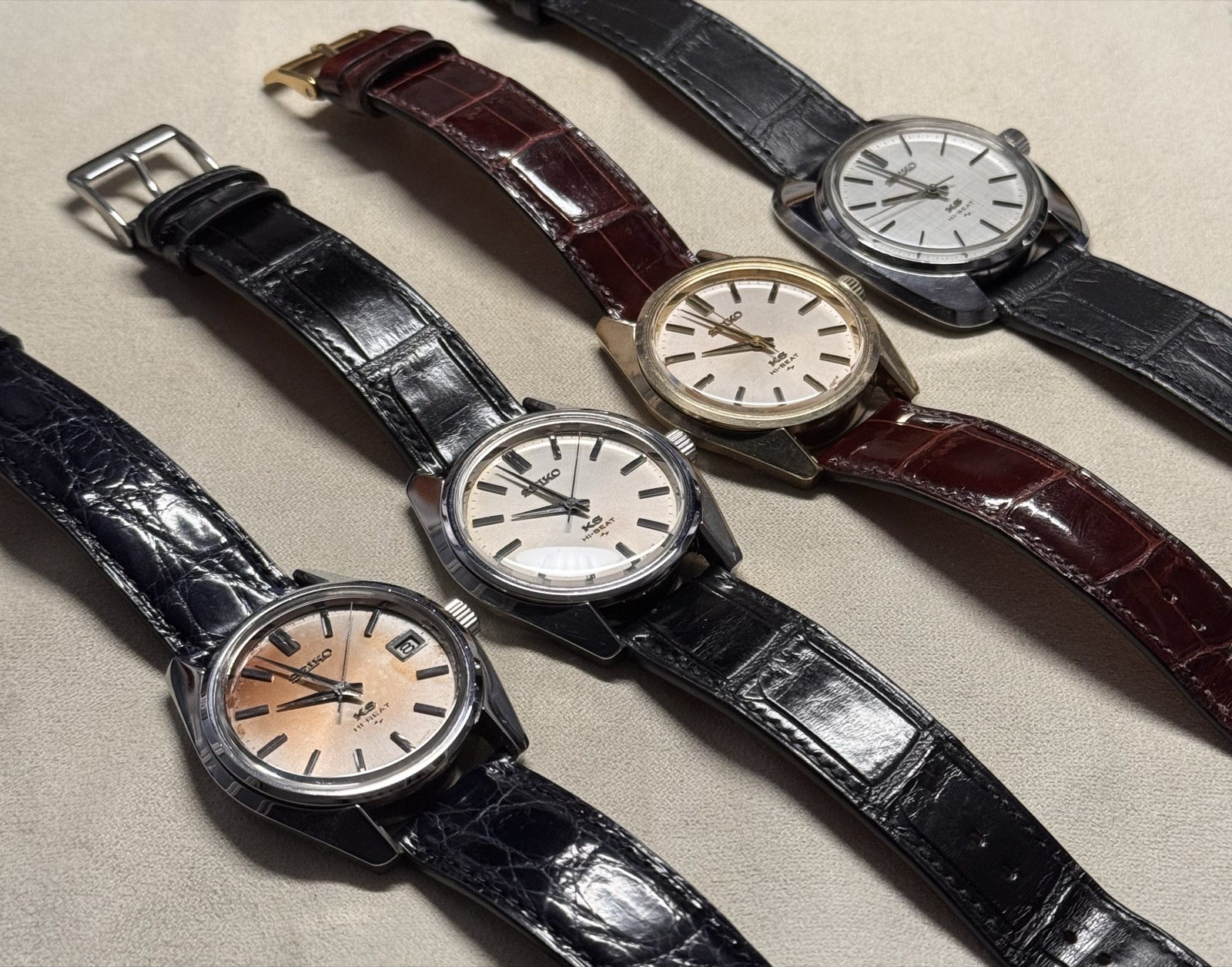
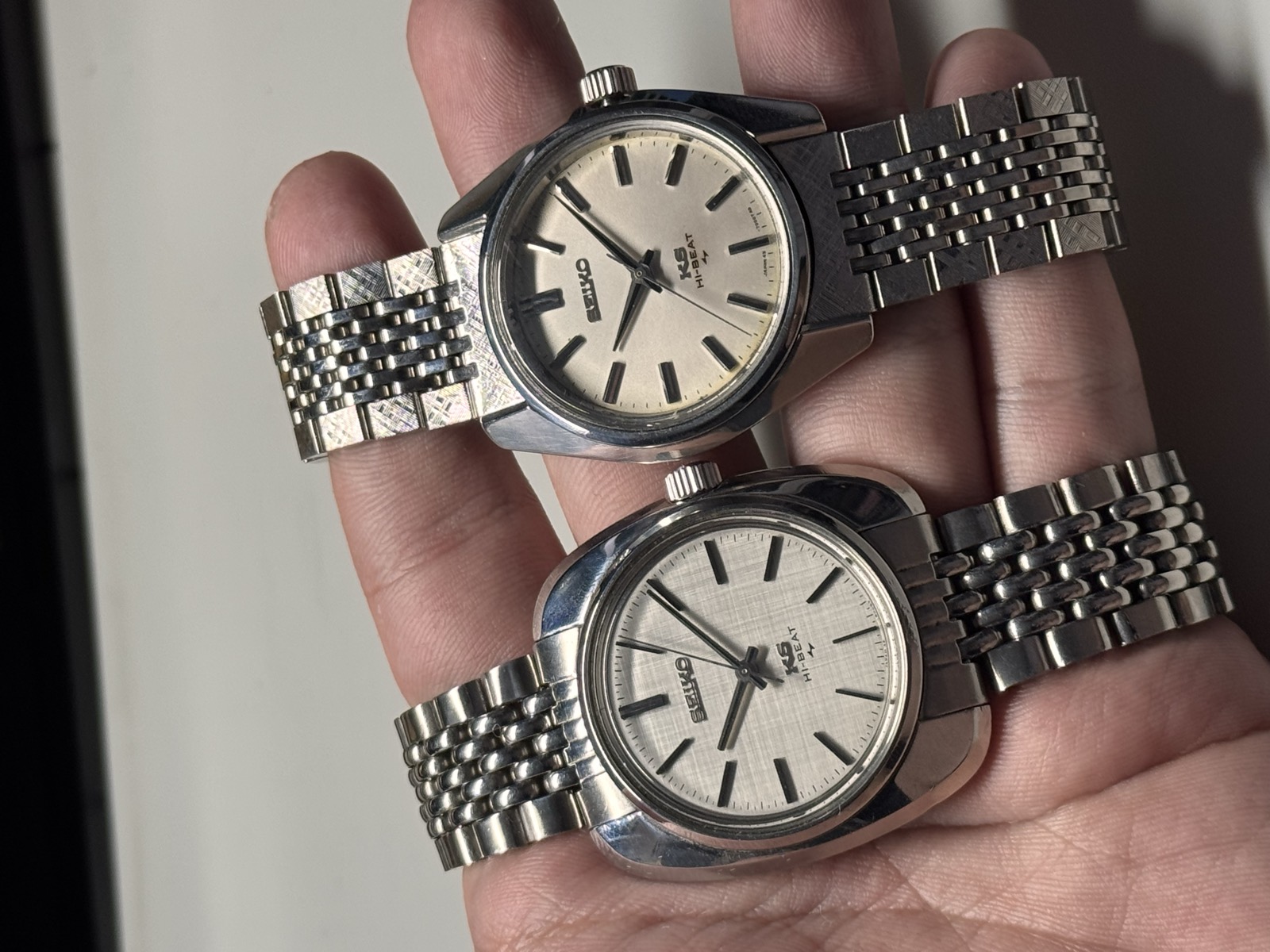
All four of mine are 45KS. The date model is a 4502, the same caliber with a date added, and its dial has gone properly tropical, much further along than this one. The linen dial on the bracelet is a 45-8000, a bigger case at 39 mm, and that texture does something completely different with light than the plain silver does.
The gold capped one is holding up fine for its age, which is not something I would promise about every gold capped Seiko from this period. If you own one, seriously consider fitting a see-through case back. Not just for the view ( though that's a nice bonus ), but for protection. The medallion lives on that back, and once the cap wears through there's no getting it back.
Assessment
Strengths
- Lug geometry that nothing else at this money comes close to
- A hand-finished 36,000 vph movement from the last year Seiko made them this way
- Original dial and hands, intact gold medallion, sharp case back engraving
- No date, which makes it a proper grab and go watch in a dress case
Weaknesses
- The mainspring barrel teeth chip. I've replaced one. Wind it carefully!
- Amplitude falls off after the first 20 hours of a 40 hour reserve
- No lume worth the name, and no water resistance I would trust
- A very small crown on a movement that needs a lot of winding
- This particular example has been lightly polished
This is easily a top three vintage Seiko, and I don't say that lightly.
What the 45 has that almost nothing else from this period has is that everything about it agrees with itself. The case was designed around one idea about light and it doesn't compromise anywhere. The movement was designed around one idea about rate, and Daini accepted a real engineering cost to get there. A barrel that chips is the bill for 36,000 vph, and they paid it rather than back off the number.
That's the part I take into my own work. Decide what the watch is actually for, then accept what that decision costs you, and don't water it down just to make things easier.
58 years old and still ticking ten times a second on my wrist. Not bad for a watch that was built to win an argument!