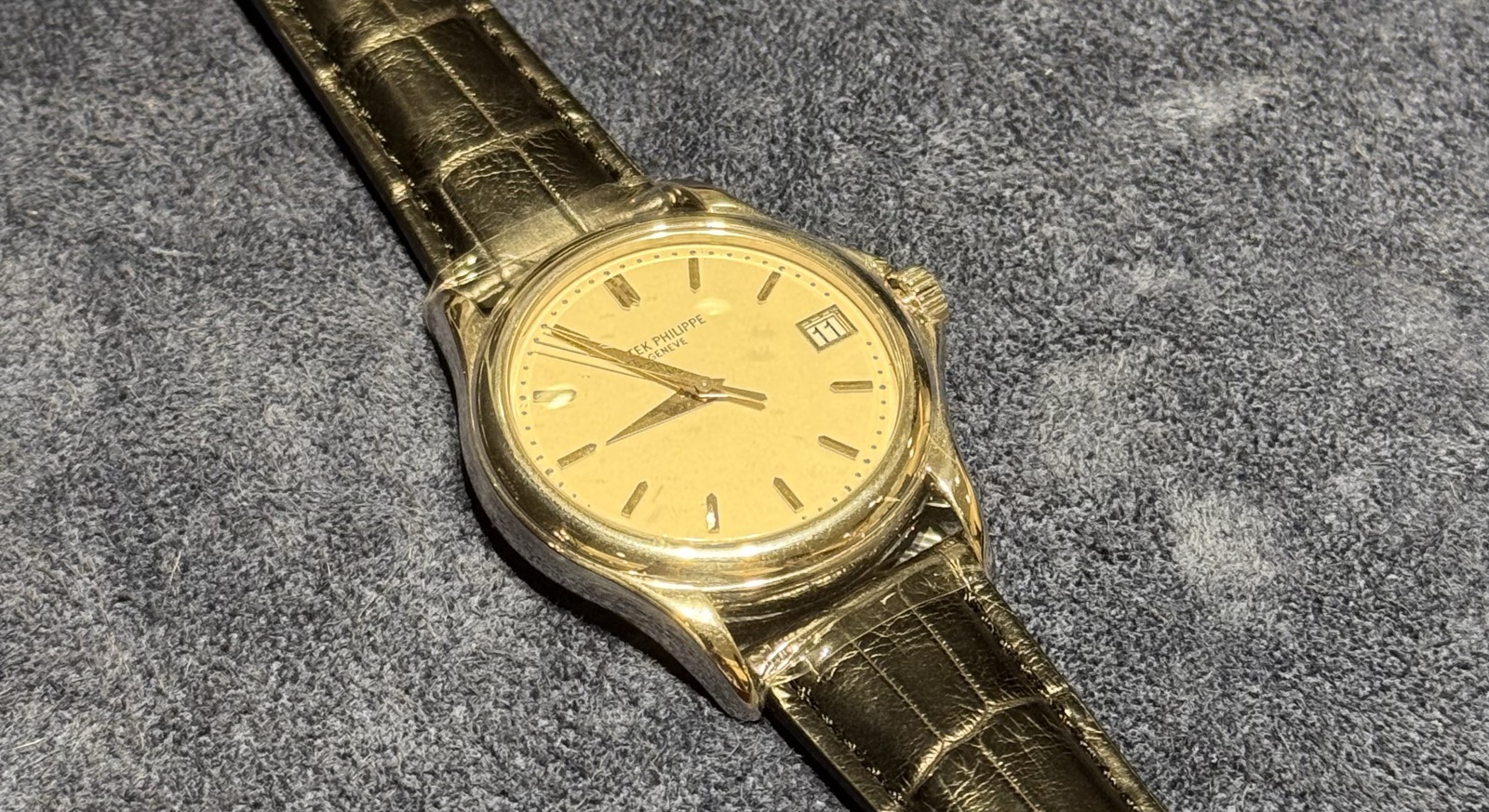
Technical specifications
- Reference
- 5127G-001
- Series
- Calatrava
- Movement
- Mechanical, self-winding, cal. 315 S C / 324 S C
- Jewels
- 29
- Functions
- Hours, minutes, centre seconds, date
- Case
- 37 mm, white gold
- Water resistance
- 30 m
- Introduced
- 2005, replacing the 5107
- Discontinued
- Around 2013, replaced by the 5227
If you're in the watch collecting world, I know you have at least one timepiece you can't stop thinking about. For me, it's the Patek Philippe 5127G-001, a white gold masterpiece.
On my recent trip to Japan, I was lucky enough to get my hands on this grail watch of mine. Before starting my review, warm thanks to the staff for letting me admire and photograph it.
The lugs
As I might've mentioned before, the lugs are one of the elements I consider most important on a watch: how they taper, how thick they are, and a thousand more measurements I can think about.
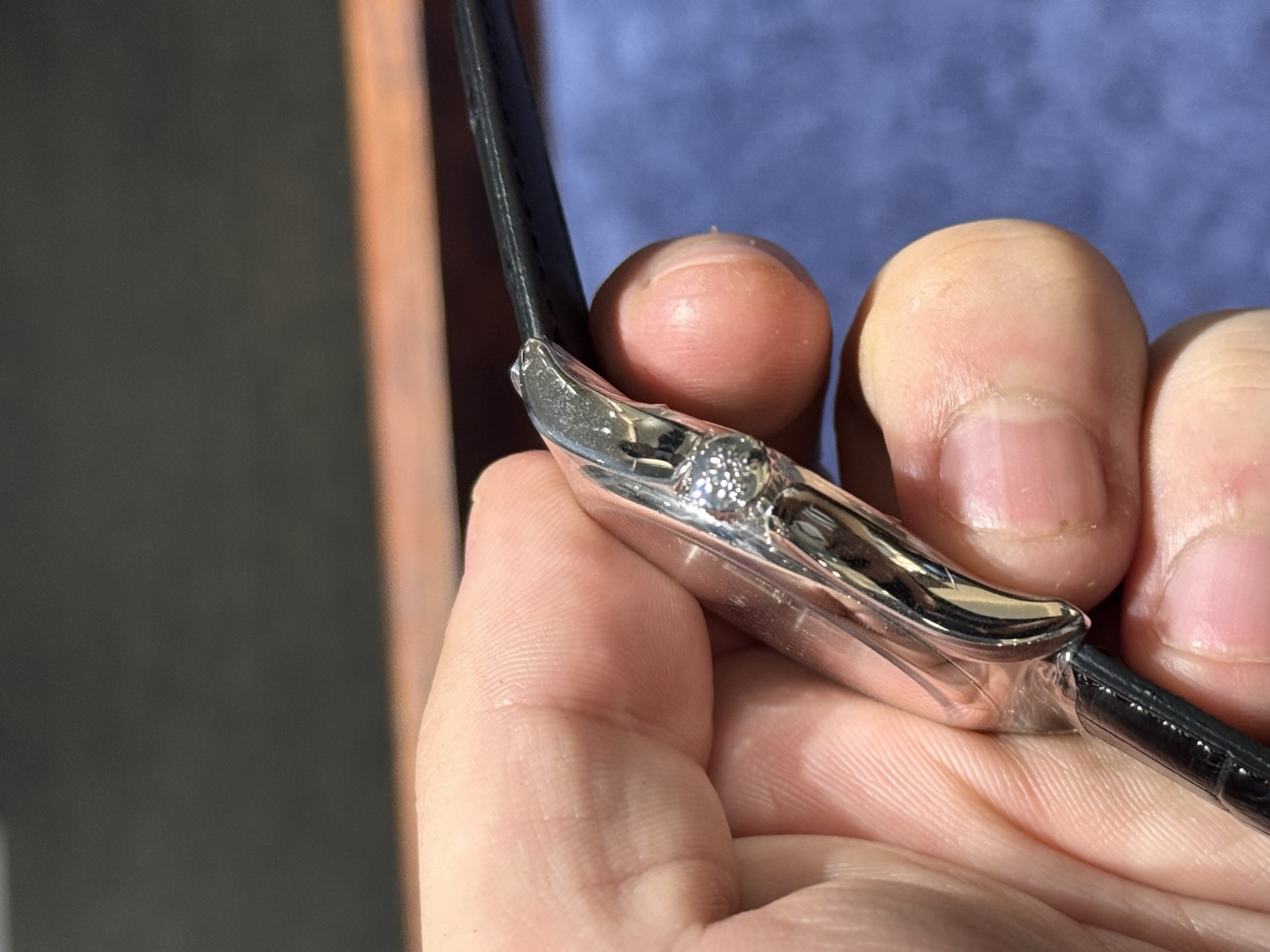
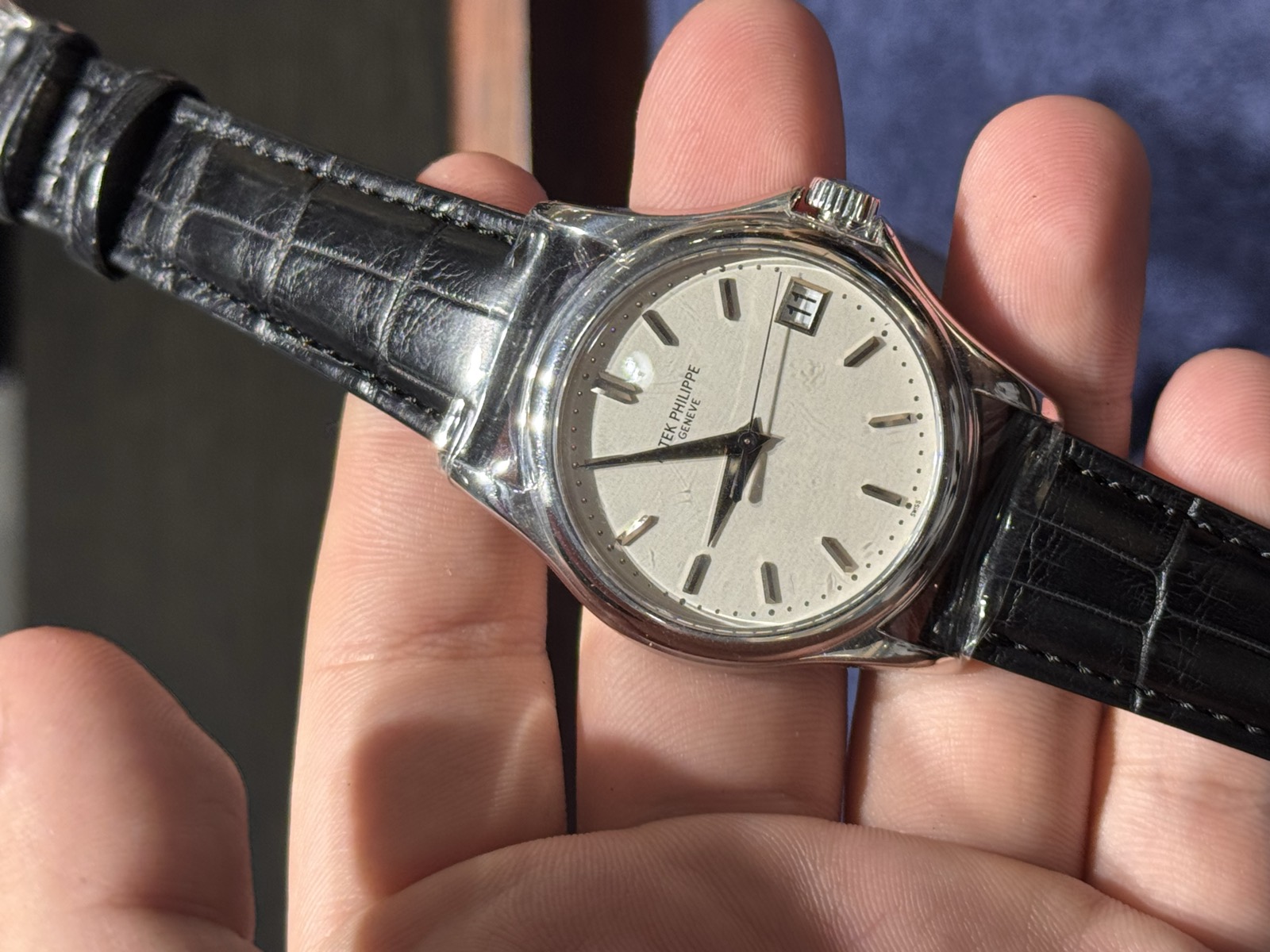
In my opinion, this watch's most distinctive feature is the crown guard itself. It wraps around the main case elegantly, with a smooth transition that shelters the crown. Modern Calatravas such as the 5227 don't have crown guards like this and take a more modern approach to design. Some might call the 5127G-001's lugs old-fashioned or outdated, yet I think they're beautifully executed and showcase Patek Philippe's design capabilities, especially in their neo-vintage models.
The bezel
The bezel is unmistakably one of the most important elements of a watch, since it's the first thing your eyes catch.
It's a shallow dome, executed with a mirror finish. Together with the case and lugs, it blends in seamlessly. The high polish also goes exceptionally well with the dauphine hands, a classic Patek Philippe feature.
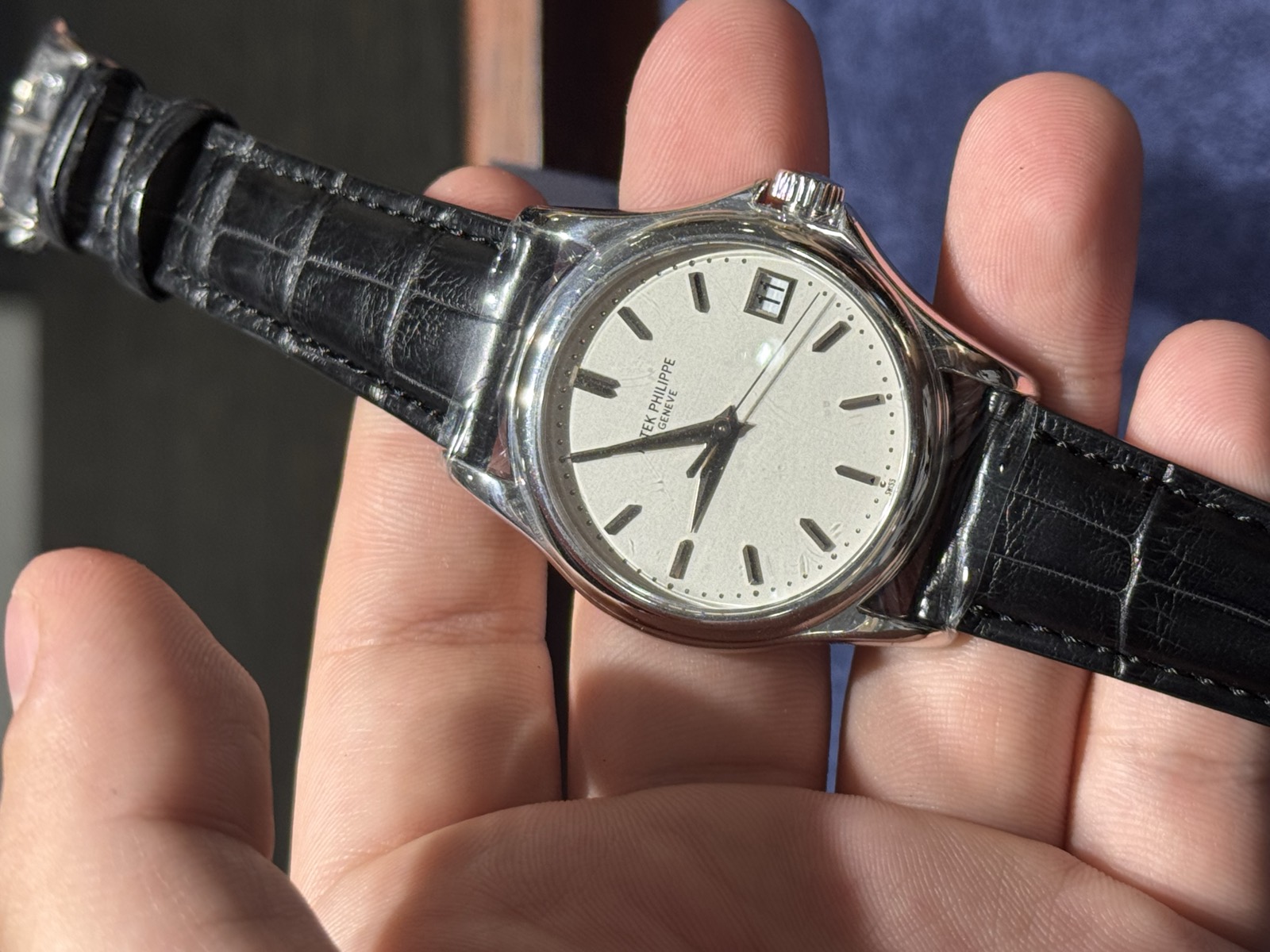
The dial
From far away, the dial might seem to lack complexity, or even look bland. However, I believe its simplicity is what makes it shine. Simple done right, in a shade close to eggshell white, gives off a subtle yet elegant vibe.
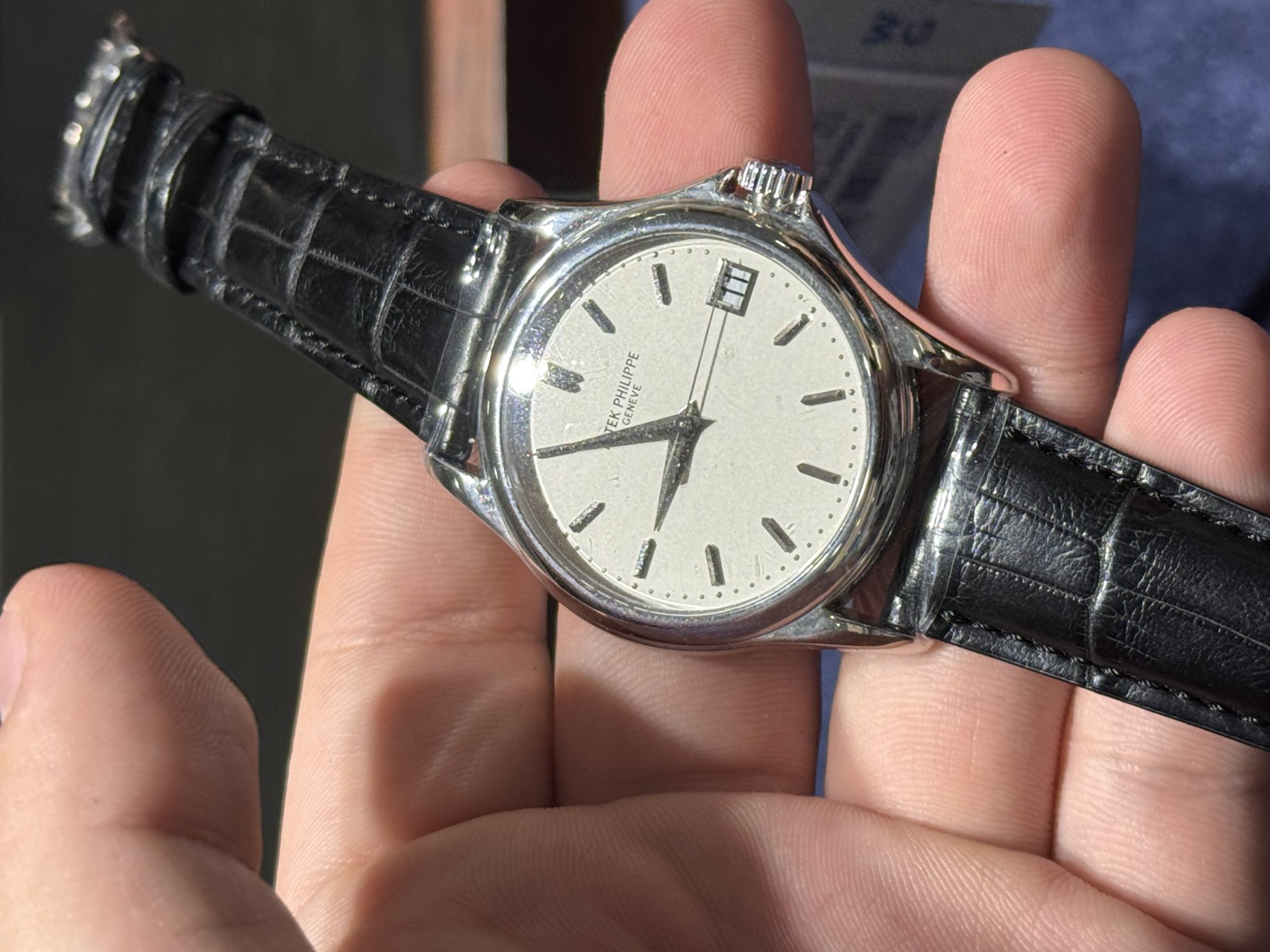
The bar-shaped indexes are classic Calatrava design, screaming "yes, I am a Calatrava." The dots around the minute track, with the dots missing over the date window, are another detail I'd like to focus on. Dials can often seem too complex, cluttered, or plainly "busy," yet the 5127G-001 considers even the smallest detail for its wearer.
However, this feature is only true of the earlier version of this reference. Later models have 60 dots instead of the original 57, without the gap at the date window. I know some fans prefer the full 60-dot version, since it shows more geometry. For me, the 57-dot version reads cleaner and more "Calatrava."
The movement
The 5127G-001 launched in 2005 with the cal. 315 S C. It was later replaced by the cal. 324 S C, which beats at 4 Hz (28,800 vph) instead of the 315's 3 Hz (21,600 vph). Both are excellent movements. I haven't serviced either one myself, so I'll leave the mechanics to people who have.
Assessment
If I had to name one thing I'd change, it's the water resistance. 30 m is fine on paper for a dress watch, and I'm never taking a Calatrava swimming. But 50 m is the point where you stop thinking about it, and that margin wouldn't change what this watch is. It would just give the wearer peace of mind.
This Calatrava isn't just a simple three-hand dress watch. It's a horological masterpiece with the utmost attention to detail: an exceptional case, dial and hands, paired with a great movement. It doesn't try to be flashy or technologically advanced. Instead, it quietly shows off Patek Philippe's watchmaking know-how and decades of design. It doesn't try to impress you. It just gets everything right.